

Food safety
Eating food that has not been properly prepared or stored can make you sick. Food can be contaminated with harmful microorganisms without looking, smelling, or tasting bad.
Submit a complaint about a facility in:
- Hastings and Prince Edward Counties
- Kingston, Frontenac, and Lennox & Addington
- Lanark, Leeds and Grenville Counties
Food-borne illness
Food-borne illness occurs when you eat food that contains harmful microorganisms, or toxins. Food-borne illness can cause mild to severe illness, from diarrhea to death. People with weaker immune systems, such as pregnant women, young children, and older adults are more vulnerable to the effects of food-borne illness.
Signs and symptoms of food-borne illness
Signs and symptoms can occur within a few hours to several days after eating contaminated food. If you have difficulty breathing, swallowing, or if you develop paralysis or double vision, you should seek medical attention immediately.
Make sure your food is safe
It’s important to follow food safety rules to stop you and your family from getting sick. You also need to make sure that any food you buy from a home-based food business has been checked by public health and follows food safety rules.
Ensure food is cooked to the proper internal temperatures. Visit Health Canada to view the Safe Internal Cooking Temperatures Chart for proper cooking temperatures of various foods. Reduce your risk of food poisoning by thoroughly cooking your food.
Ensuring food safety by developing a food safety plan
A food safety plan is a written set of procedures designed to identify and control hazards to prevent food-borne illness. It includes identifying Critical Control Points, setting safety limits, monitoring procedures, defining corrective actions, and keeping records to ensure compliance. Use this guide HP-FS-9040 Writing a Food Safety Plan in helping you create a food safety plan and contact your Public Health Inspector for support if required.
Food handling practices that cause most food-borne illness
Food handling practices that are most often associated with food-borne illness include inadequate cooling, advance preparation, infected food handler, inadequate reheating for hot holding, and improper hot holding. Learn more about risky food handling practices below.
Inadequate cooling
Cooking destroys most harmful microorganisms, but not all. Spores survive cooking, they germinate once the food is in the temperature danger zone. When they reach high enough numbers they can cause food-borne illness. This is why cooked food must be cooled quickly using appropriate time and temperature controls. To help food cool down faster use shallow pans, separate into smaller batches, use a cooling stick/ice wand, immerse in an ice water bath, etc.
Advance preparation
When foods are prepared well before serving, they tend to spend too much time in the temperature danger zone, usually due to inadequate cooling. It is best to prepare food as close to service as possible.
Infected person
Food handlers can contaminate food when symptomatic or when they appear healthy, but hygiene practices are inadequate. Symptoms to watch for include diarrhea, vomiting, jaundice, hand infections, and fever. Food handlers who are carrying harmful microorganisms can easily spread them to food. To prevent contamination of food good hand hygiene is essential and not preparing food while ill.
Inadequate reheating for hot holding
Advanced preparation or use of leftovers make the food vulnerable to growth of harmful microorganisms due to temperature abuse. Rapid reheating to 74°C or higher for 15 seconds is important and using hot holding units that are at proper temperature.
Improper hot holding
Hot holding units are meant to hold food at 60°C or higher. They are not meant for re-heating food as it takes too long and subjects the food to temperature abuse. Use a thermometer to verify hot holding temperature.
Contaminated raw food or ingredient
Certain foods such as seafood are often consumed raw, however they carry a higher risk of food-borne illness. All foods should be obtained from approved suppliers, where possible use processed or pasteurized alternatives, and avoid serving these types of foods to high-risk customers.
Unsafe source
Only food from approved and inspected sources should be used in food service establishments.
Use of leftovers
Using leftovers is risky because food passes through the temperature danger zone multiple times and can be subject to improper cooling and reheating. Furthermore, there is a chance of contamination by raw foods in the refrigerator. Leftovers can be reheated only once.
Cross contamination
Cross contamination happens when something that can cause illness (such as raw meat juice, allergens, or chemicals) is accidentally put into food where not previously found. To prevent cross contamination, use separate cutting boards and utensils, separate storage areas, wash hands, clean and sanitize your food prep areas.
Inadequate cooking
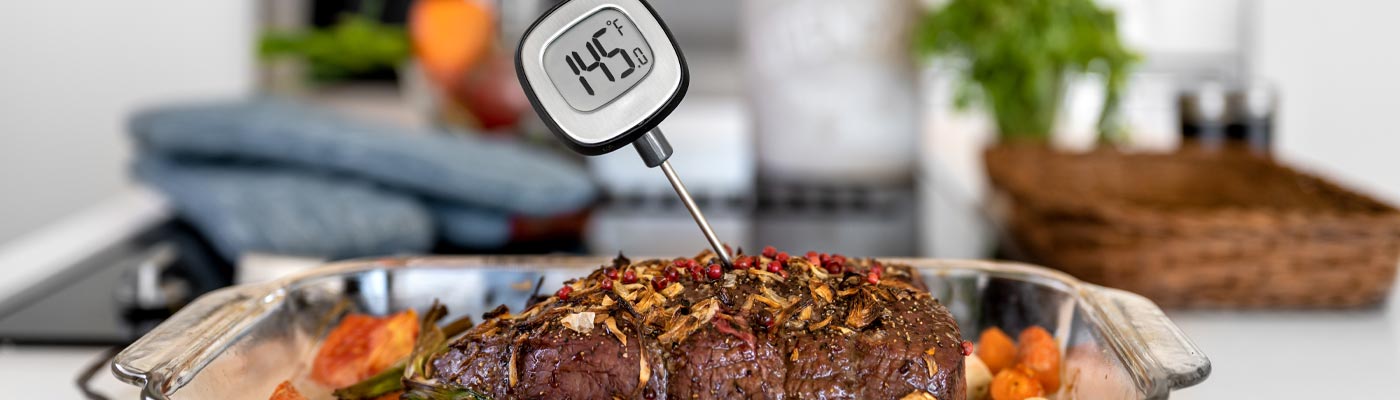
Inadequate cooking leaves harmful microorganisms in food, which can cause illness. It is often accidental and can be avoided by using probe thermometers to measure internal temperature of food.
Food safety during a power failure
Planning ahead and preparing to stay safe during an emergency includes storing your food properly. Learn how to keep food safe during and after a power failure.
During a power failure
- Keep your fridge and freezer doors closed to maintain temperature.
- A full freezer can keep food frozen for 48 hours, while a half-full freezer lasts about 24 hours.
- An unopened refrigerator will keep food cold for about four hours.
- Discard all food that has been at room temperature for two or more hours.
- Monitor local news, weather reports, and updates from your utility provider for outage updates and expected restoration times.
After the power returns
- Check the temperature of your refrigerator and freezer: Any food that was stored at or above 4°C for two hours or more should be thrown out. If frozen food has thawed and risen above 4°C it should be discarded.
- Monitor temperatures: If you have a thermometer in your refrigerator or freezer, check the temperature. Food should be kept at 4°C or below in the refrigerator and 0°C or below in the freezer.
- Examine each food item carefully: Squeeze the frozen food. If you hear the crunch of ice crystals, then it is only partially thawed and can be refrozen. Look for signs of spoilage, such as unusual odour, colour, or texture.
- Clean and sanitize: After discarding any spoiled food, clean and sanitize the interior of your refrigerator and freezer with a solution of 2.5 ml of bleach per litre of water. If any food comes into contact with raw meat juices, it should be thrown out. You can help prevent this by storing raw meats separately and below other foods.
- When in doubt, throw it out: Do not risk consuming food that may be unsafe.
Specific food safety concerns
- Meat, poultry, seafood, and eggs: Discard if they have been above 4°C for more than two hours.
- Dairy products: Milk, yogurt, and soft cheeses should be discarded if they have been above 4°C for more than two hours. Hard cheeses can be salvaged if they do not have mold.
- Cooked foods: Leftovers, casseroles, and cooked vegetables should be discarded if they have been above 4°C for more than two hours.
- Frozen foods: If frozen foods have thawed and no longer contain ice crystals, or if they have an unusual odour or colour, discard them.
For a list of current food recalls, food policy, and up-to-date information visit the Canadian Food Inspection Agency.
Setting up a home-based food premises
If you are planning to start a home-based food business, please visit our food premises page for detailed steps on how to ensure your business meets regulations and is operating safely and legally.
Donating food safely
In times of need, sharing food can be an impactful way to support your community, but it is essential to do so safely and responsibly.
Top tips
- Keep potentially hazardous foods such as sandwiches or salads at 4°C or colder in the fridge and transport it on ice in a cooler.
- The safest way to prepare hot foods, such as soups, is to cook it and immediately transport it hot at 60°C or higher.
- Bacteria that cause food-borne illness don’t affect the smell, taste or colour of food, so throw potentially hazardous food out if:
- It has been stored at room temperature for more than two hours.
- There is any doubt that the food has been correctly stored.
- A probe thermometer is the best way to measure the internal temperature of hot meals (such as chili or meat) to check that it has reached a safe internal temperature.
Safety guidelines for donating food
Low-risk foods
Low-risk foods are the safest food options for donation, for example:
- Non-perishable foods that do not require refrigeration to maintain food safety (such as dry goods and canned goods).
- Low-risk perishable foods (such as whole, raw fruits and vegetables) that have not been cut or peeled.
- If these are prepared in any way (such as cut) they need to be refrigerated to avoid contamination.
Potentially hazardous foods
- Foods like dairy, egg, tofu, meat products, and prepared dishes can be potentially hazardous, because these types of foods support the growth of microorganisms such as bacteria that can make us sick.
- These foods require time and temperature control to limit growth of bacteria.
- Temperature: Keep potentially hazardous foods out of the danger zone, 4°C to 60°C (this is where bacteria can grow quickly). Keep cold foods cold (4°C or below) and hot foods hot (60°C or above).
- Time: Potentially hazardous foods must not be held in the danger zone (above 4°C and below 60°C) for more than two hours.
- Ready-to-eat food
- Does not require further preparation prior to eating.
- Food that can be consumed ‘as is’ without additional cooking.
- Ready-to-eat food can be pre-packaged and can be shelf-stable or require temperature control (such as refrigeration or hot holding).
Hazardous foods not safe to donate
Foods that are not safe to donate include:
- Partially consumed foods
- Uninspected meat
- Unpasteurized dairy or juice products
- Ungraded or “Grade C” eggs
- Home canned food products
- Foods that have been previously offered, displayed or served to patrons
- Expired baby formula, meal replacements, nutritional supplements or formulated liquid diets
- Food that was damaged from flood or fire
- Food with visible damage or compromised vacuum seals
- Foods with insect or rodent damage
- Potentially hazardous foods that have been temperature abused (that is, not stored at the proper temperature)
Safe food preparation
- Wash hands with soap and water for at least 20 seconds:
- Prior to preparing food
- After touching raw meat, poultry, eggs or seafood
- After touching pets
- After using the bathroom
- After sneezing or coughing
- When preparing food, use equipment and surfaces that are easily cleanable, non-toxic and non-corrosive.
- Surfaces and dishes that contact food should be washed in hot water with detergent, rinsed, sanitized, and air dried.
- A sanitizer can be prepared by mixing 1 teaspoon (5 mL) of unscented household bleach (5.25 percent sodium hypochlorite) with 3 cups (750 mL) of water.
- Keep pets separate from food preparation area.
- Separate raw food from other food and surfaces to prevent bacteria from spreading:
- Store raw food at the bottom of the fridge in sealed containers or plastic bags to stop raw meat juice from falling on other surfaces.
- Clean and sanitize surfaces that have touched raw meat.
- Use a separate cutting board for raw meat and different ones for fruit or vegetables.
- Prepare vegetables or fruit first before preparing raw meat.
Time and temperature control
Potentially hazardous food has the potential to allow for bacteria growth and their toxins to be produced. Time and temperature control can help minimize this to help make food safe.
The “danger zone” is when food is stored above 4°C and below 60°C. This is the temperature that allows bacteria to grow more rapidly. Food should not be stored in the danger zone for more than two hours.
- Keep cold food cold at 4°C or colder.
- Keep hot food hot at 60°C or hotter.
- Use a probe thermometer to measure the internal temperature when checking cooked food to ensure bacteria has been killed.
Safe cooking temperatures
- Whole poultry: 82°C
- Food mixture containing poultry, egg, meat, fish, or another potentially hazardous food: 74°C
- Poultry pieces or ground: 74°C
- Pork: 71°C
- Fish: 70°C
Safely thaw foods to prevent bacterial growth:
- Thaw in the refrigerator
- Under cold running water
- In the microwave (cook immediately after)
Safe cooling and reheating
- The safest way to serve hot food is at 60°C or above. If food needs to be cooled, help prevent bacterial growth and toxin formation by:
- Cooling hot food from 60°C to 20°C within two hours
- Cooling food from 20°C to 4°C within four hours
- Cooling can be done safely by:
- Putting foods in smaller containers
- Putting foods in shallow containers
- If food is cooled and is to be reheated on-site Health Canada’s current recommendation is to heat all leftovers to 74°C.
Safe food delivery
- Food requiring refrigeration should be kept cold during transport, at 4°C or less (such as on ice in a cooler).
- Hot food should be kept hot during transport, at 60°C or hotter (such as in a Cambro).
- Store food in food-grade containers or packaging that are free from cracks or chips.
- Food should remain covered during transport to protect against dust, insects, or other sources of contamination.
- Label any personal equipment (such as a cooler) with your name and telephone number so it can be returned.