Language Express information for teachers and early years professionals
How to order Language Express print resources
Call our office at 1-888-503-8885 or 613-283-2742 or fill out our online order form.
Ideas for supporting speech and language development
Speech sounds
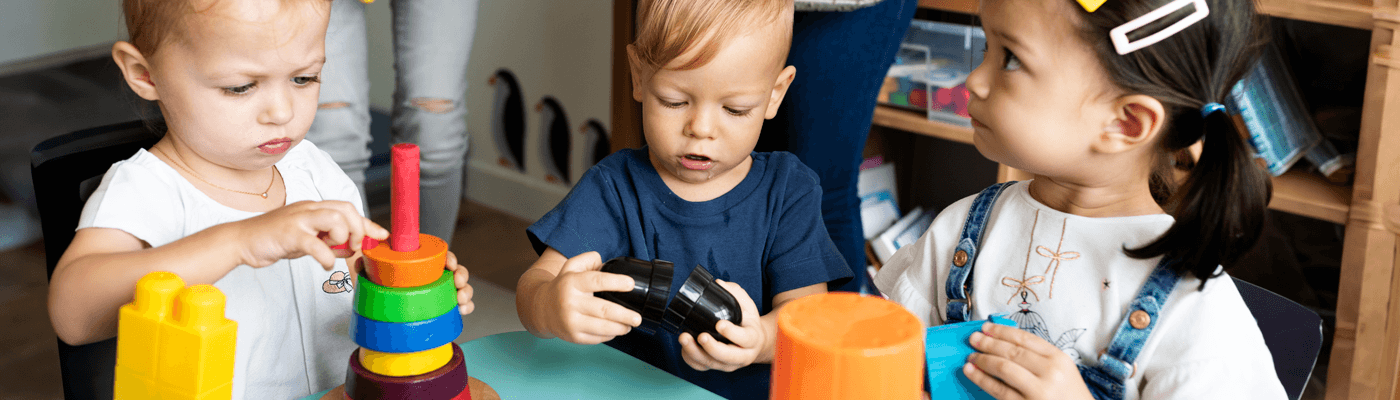
Young children learn to make speech sounds through observation, imitation, and practice. You can help:
- DO: Be face-to-face as much as possible.
- DO: Repeat correctly, so that the child hears a clear, correct version of what they just said. For example, if the child says, “Mo teese!” you could say, “More cheese. I want more cheese, please.”
- DON’T: Ask the child to try again or tell them that they said it wrong. If the child is receiving speech therapy, you can ask the speech-language pathologist if there are other ways you can help.
Encourage play with peers
Check out this resource from Hanen: Tips to support peer play in early childhood settings.
Circle time
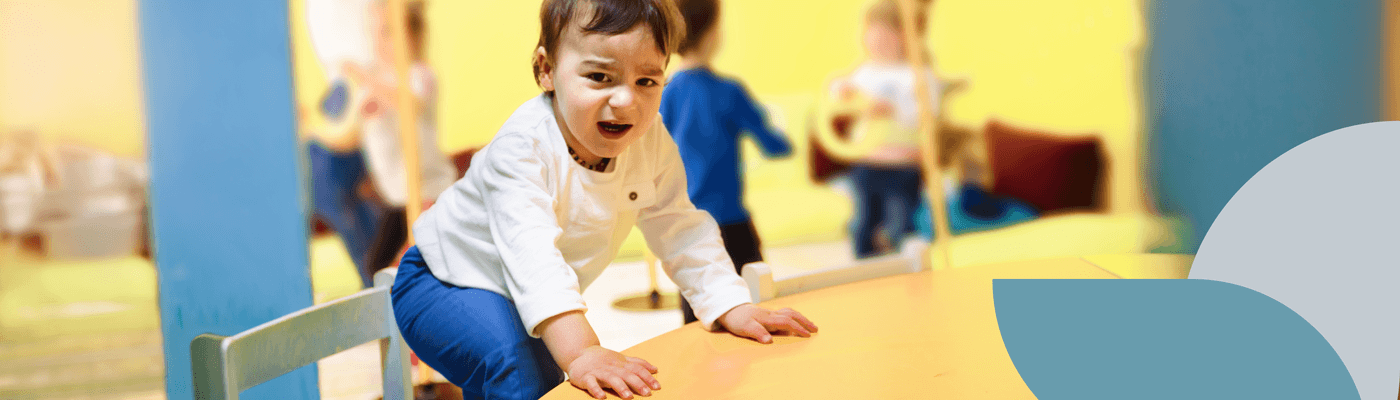
Children with speech and language delays and disorders often have difficulty participating in circle time. They may be very quiet and say and do very little, or they may act out and seem distracted. Often this is because the circle has not been planned with them in mind; the pace is too fast, the focus is all on listening (not on seeing and doing), and there are not enough opportunities for learning through experience such as through repetition.
Check out the information below for some simple ideas that can make a big difference.
Slow down
Read, sing, and talk more slowly. All children need more time to process and think of what to do or say than adults do, and children with language delays need even longer. It can be hard to slow down; instead, try pausing a lot and waiting for the children to think and take their turns. Count to 10 in your head before you move on – it seems like forever, but many children need that much time.
- « Row, row, row your… » pause for children to sing “boat.”
« Gently… » pause for children to sing “down the stream.” - Teacher reading Good Night, Gorilla: “I wonder if the zookeeper knows that the animals are following him…” pause to see what the children think.
Keep the group small and the time short
The larger the group, the less the children with speech and language delays will participate. They need you to be aware of them and in a large group you can’t adapt to the needs of each individual child. Take advantage of students and volunteers and have small, short circle times with three or four children.
Check out this resource from Hanen: Make the Most of Small Groups to Support Children’s Interaction in the Classroom
Repeat with a purpose
Children learn from repetition. They learn even more when you add something new each time you repeat. A story, song, or game should be part of your circle time at least five times in a row. Each time, you should think in advance about what new thing you want the children to learn. For example:
- First time: Just getting familiar with the song, story, or game.
- Second time: Focusing on one or two new vocabulary words. Talk about and show what they mean.
- Third time: Pause often to ask thinking questions to promote the development of good narrative skills: “What do you think is going to happen next?”, “I wonder why X did that?”, “This is a silly song! Have you ever swallowed a fly?”
- Fourth time: Pause to let the children fill in words in a story or song. They may be able to do most of it by themselves with a little prompting. If your activity is a game, ask the children to tell you how to play, or to explain the game to a new player.
- Fifth time: Get creative. Act out the song or story. Do an art activity linked to the song or story, or make take-home versions of the game so the children can play it at home.
Circle time is not only for songs and stories
Games, gross motor activities, and construction activities also work well. These activities encourage non-verbal turns, cooperation, and creative problem-solving. Try:
- Building a tower, taking turns adding blocks.
- Doing a puzzle, taking turns adding pieces.
- Playing “What Am I?” and taking turns pretending to be an animal which the other children guess.
- Making a group craft, taking turns choosing and gluing things on.
- Creating a “motor circuit,” such as a well-organized obstacle course. The children line up and take turns going through a tunnel, walking on a board, tossing a bean bag into a bucket, etc. This can be a great way to settle the children down and get them regulated before starting the sit-down part of your circle. Establish clear rules: « wait your turn » or « one at a time. » Using STOP/WAIT/GO pictures is a great idea with activities like this.
Request the STOP/WAIT/GO printable resource

Share the spotlight
Make sure you’re not performing while the children just sit and watch. Young children learn from interaction. They should be doing and saying at least as much as you. Build in opportunities for turn-taking, and for children to be the leader.
Use visuals and props
Visuals (pictures and objects) should be part of every circle time. They help children to understand what is expected, they give non-speaking or reticent children a way to participate, and they help to define whose turn it is to say or do something. Try these simple ideas, or make up your own:
- Fill a bag with objects that go with a story. For example, use plastic farm animals for the story Who Said Moo? Before reading, let each child choose and hold an animal. As you look at each page together, ask the child with the animal on that page to bring it to you.
- Brown Bear, Brown Bear activity: Use a tunnel, two photocopies of each page of the book, and printed words or pictures of the animals in the book (bear, frog, horse). Children line up on waiting mats and take turns going through the tunnel. At the end of the tunnel, pictures of each animal in the story are displayed on the wall. As each child comes through the tunnel, the teacher points to an animal in the book. The child says the vocabulary word, finds the picture on the wall, and sticks the word or picture on top. The child then tells the next person in line “Your turn,” and goes back to their waiting mat.
- Make and laminate copies of pictures in a board book, and stick them to the original pages with Velcro. The children can remove or replace the pictures as you read together. Watch this video for a more detailed description of this activity.
- Use song-choice or book-choice pictures to let the children choose what they want to sing or read.
- Use a visual schedule for circle time activities. For example: song – song – story – game.
- Use a “speaker’s object” that gets passed around each time someone takes a turn. The person with the object gets to talk or take a turn in some other way, while everyone else waits.
Request song pictures and lyrics you can print
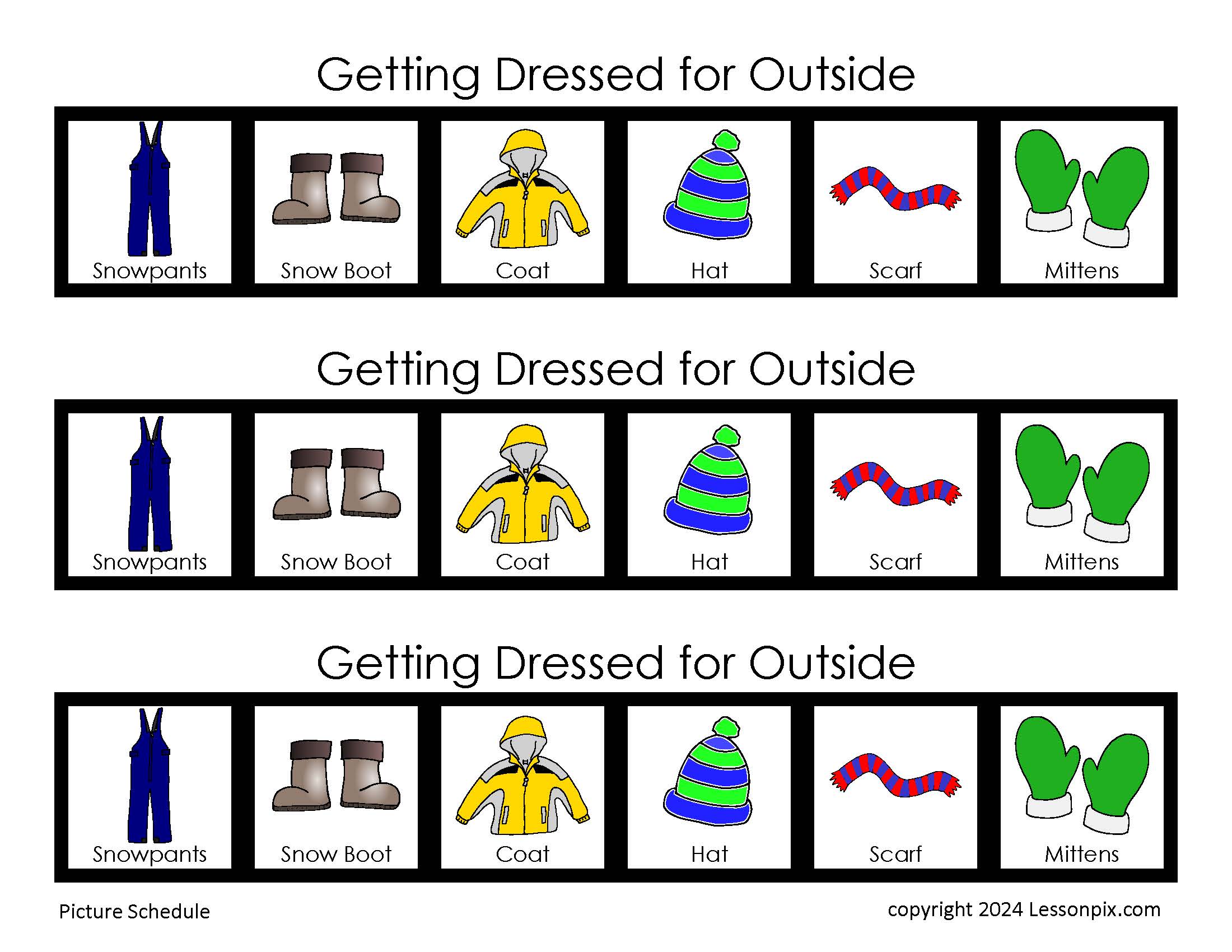
Downloadable visual supports
Request the Getting dressed for outside visual schedule
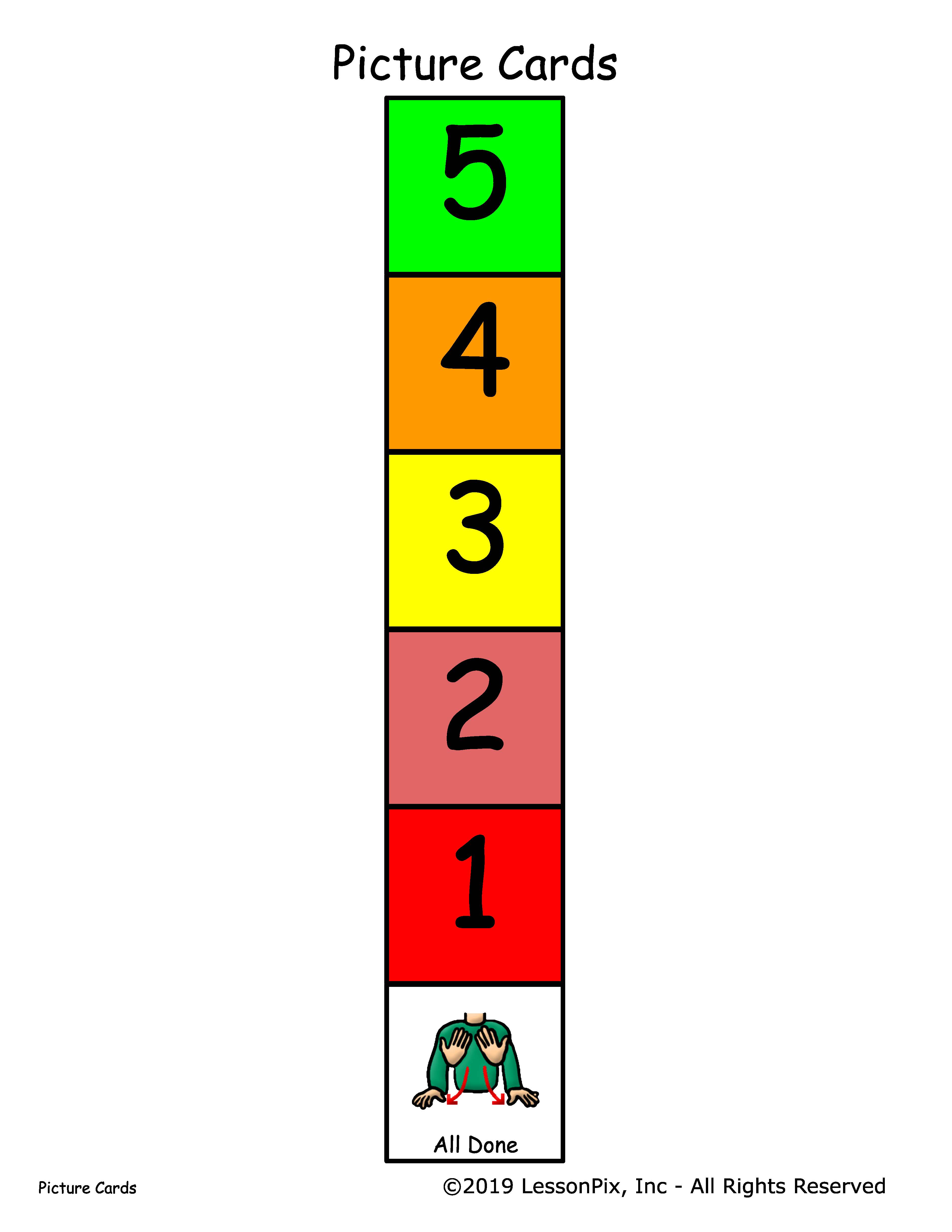
Request the Countdown visual support
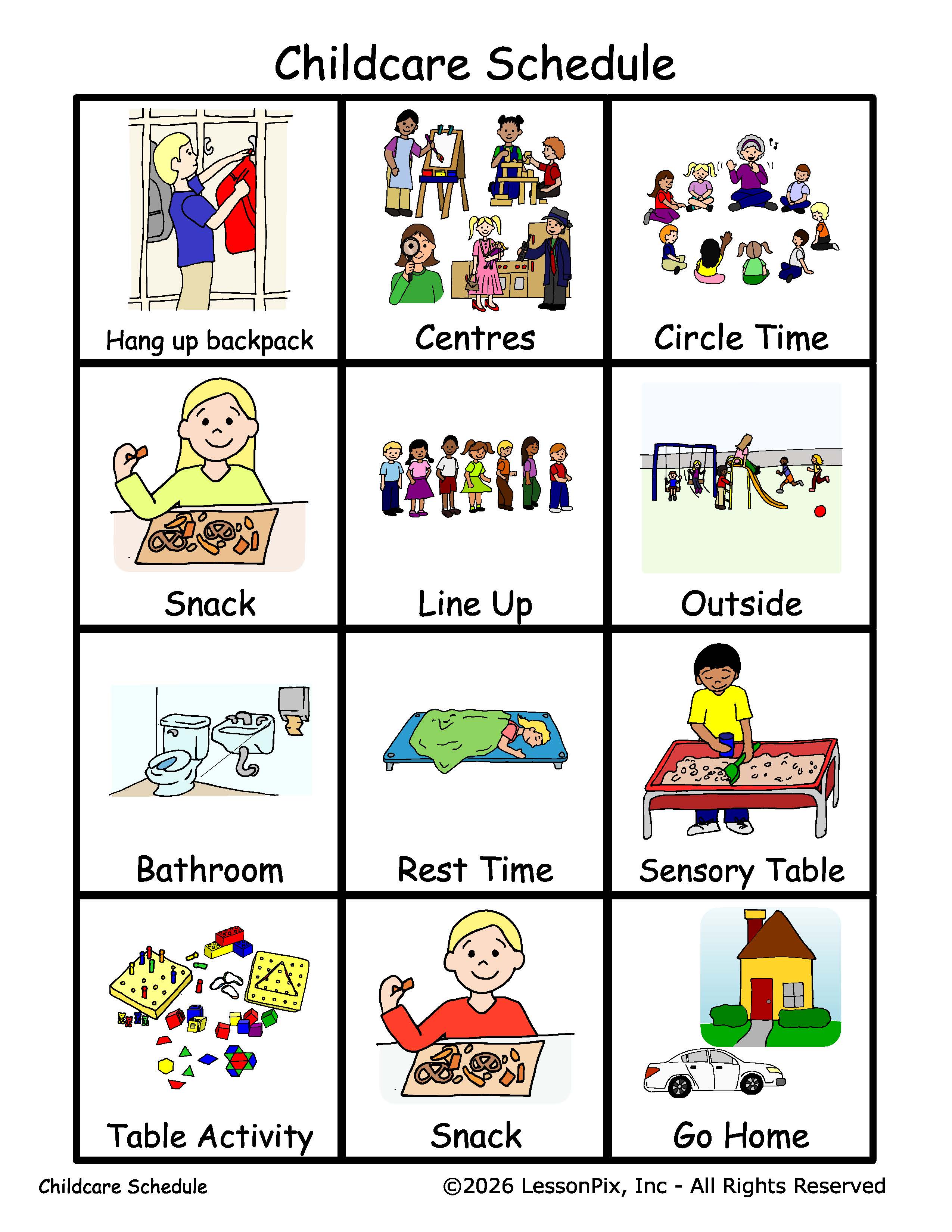
Request the Childcare activities visual schedule
Theme boards
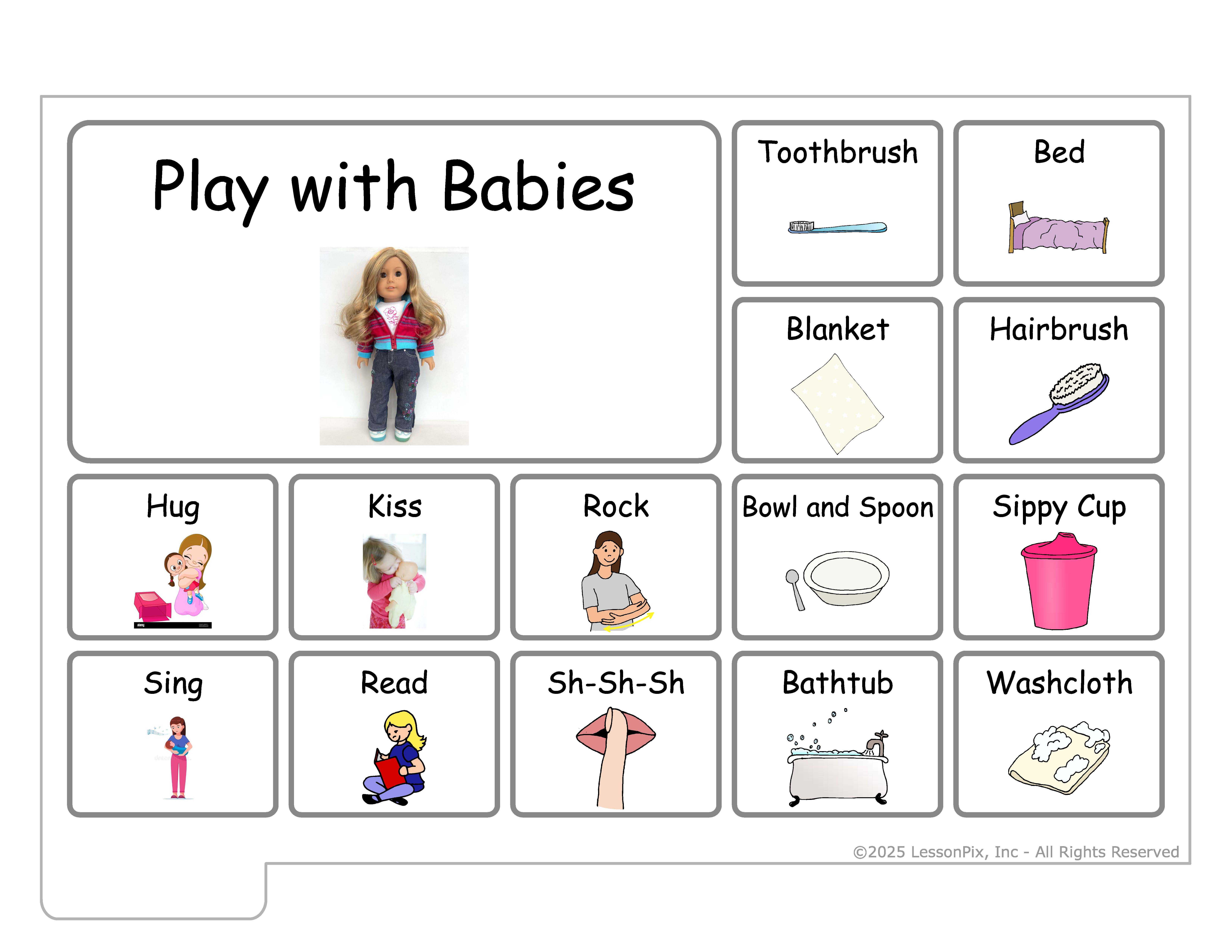
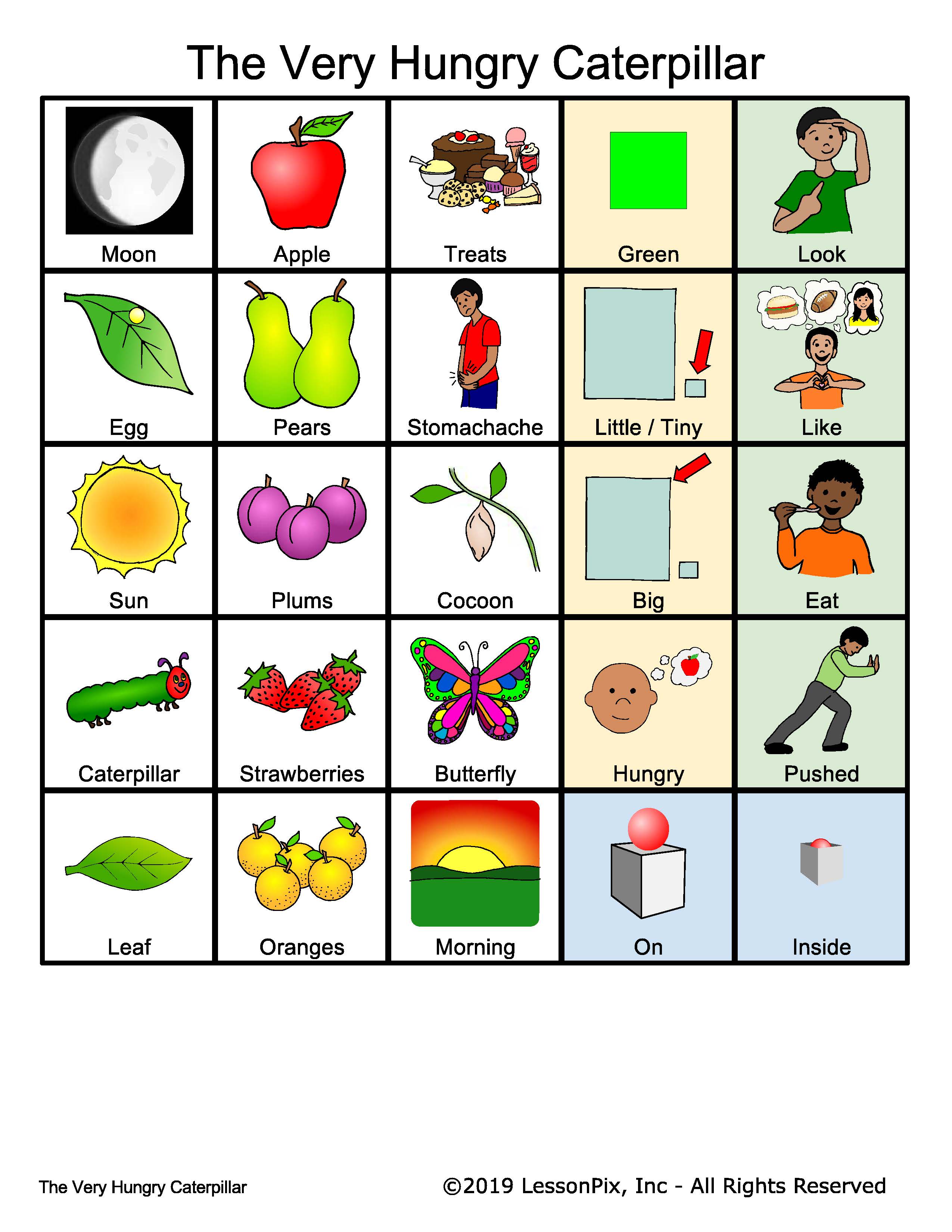
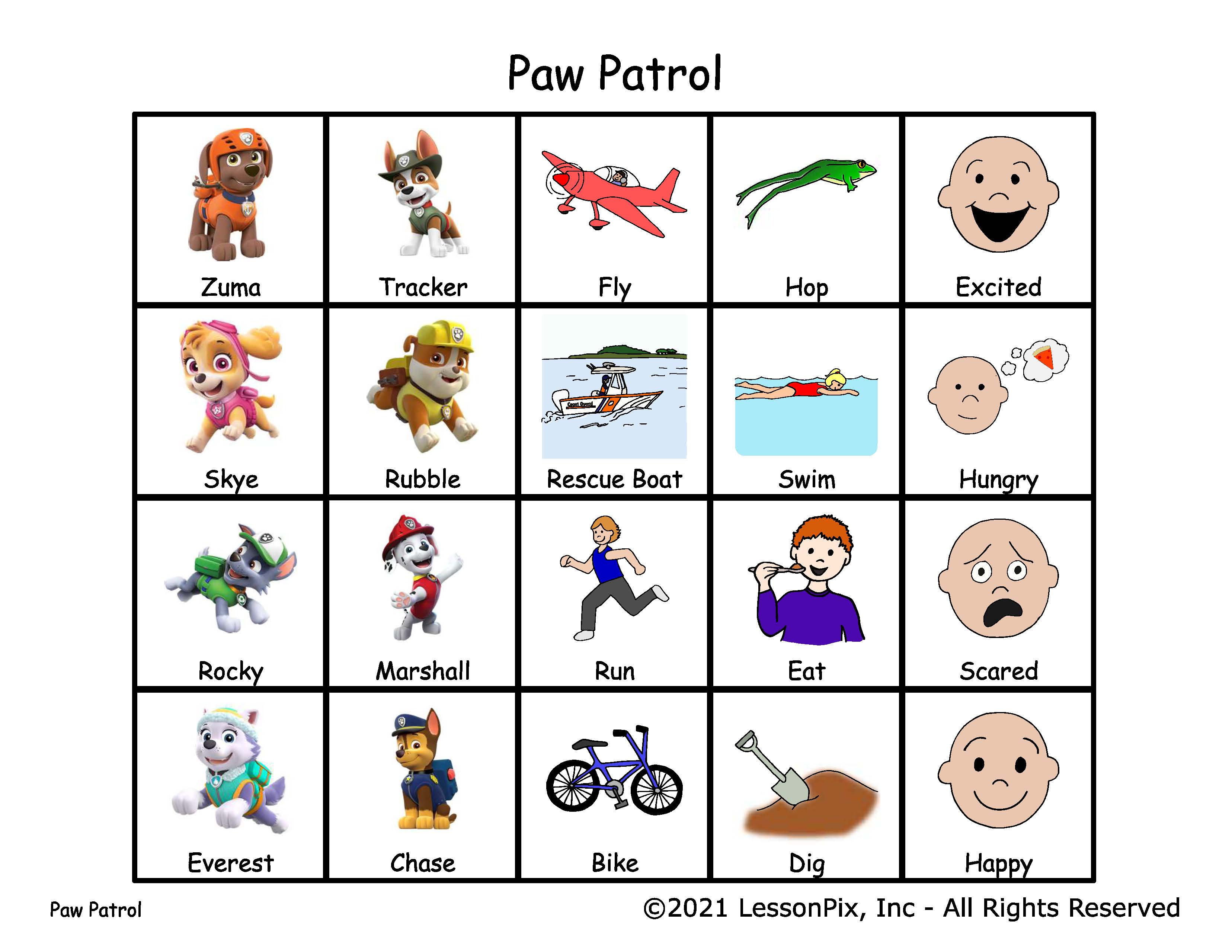
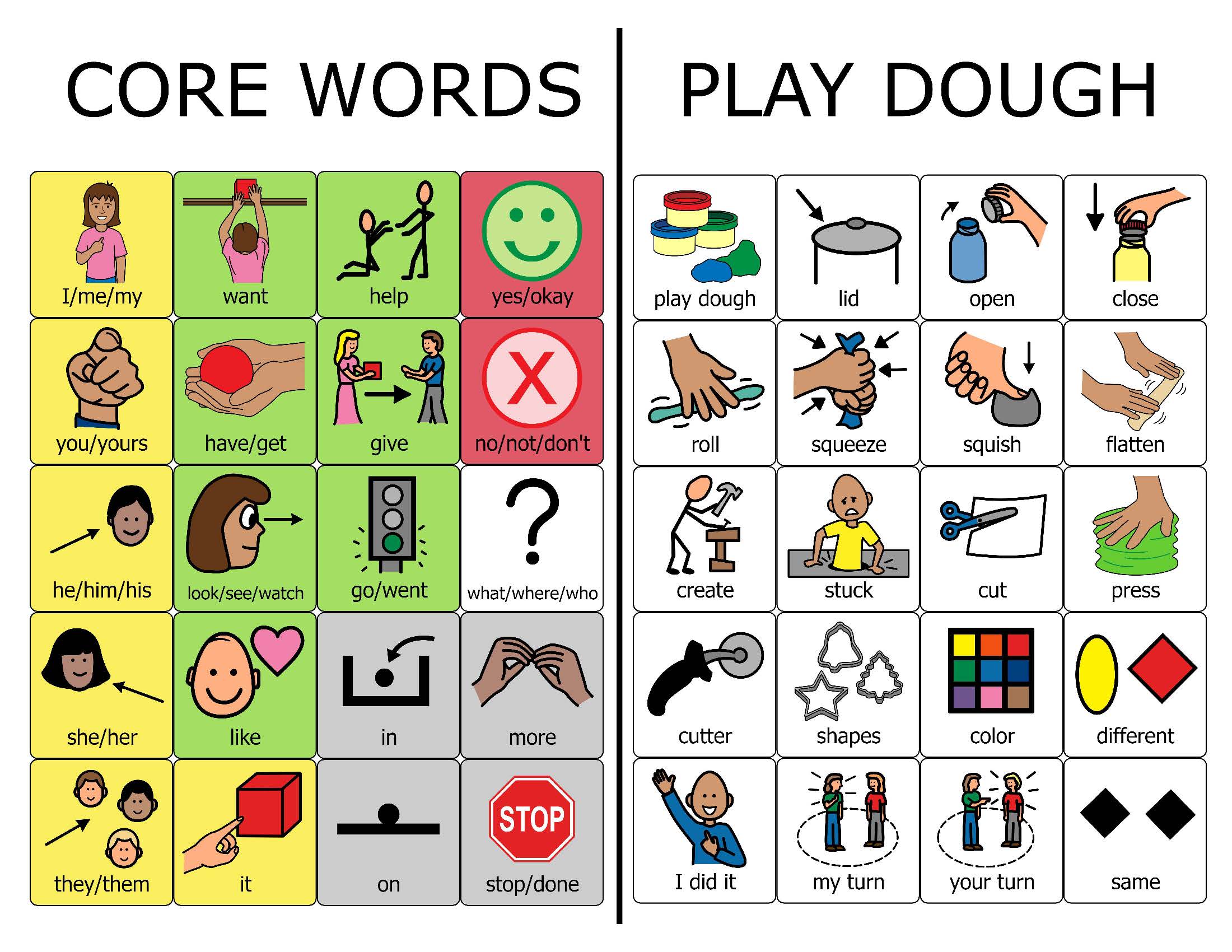
A theme board related to a specific topic or activity can help children communicate, participate, and build language skills. If a child is having difficulty getting a message across, they can point to a picture on the theme board. Adults can also point to pictures to help children understand language and model how to use the theme board. Search online for theme boards to go with many children’s books.
Request the Play with dolls theme board
Request The Very Hungry Caterpillar theme board
Request the Paw Patrol theme board
Request the Play dough theme board with core words
1-888-503-8885 or 613-283-2742
